

Traveling the oldest pilgrimage route in Japan at Kumano, a World Heritage Site
About a thousand years ago, Kumano was a center of religious devotion. From commoners to nobles and even retired emperors, countless worshippers came to the area’s Shinto temples and shrines on pilgrimage. Since being registered as a UNESCO World Heritage Site in 2004 under the name “Sacred Sites and Pilgrimage Routes in the Kii Mountain Range,” tourists have flocked to the area from around Japan and overseas. For this two-day trip through the sacred land of Kumano, you’ve planned out routes that will take you along ancient trails through the mountains and past beautiful ocean landscapes, hoping you’ll get to connect with the very roots of Japanese history and culture.
Visiting Kumano Hongu Shrine before following in the footsteps of pilgrims

At Fairfield by Marriott Mie Kumano Kodo Mihama, the ocean view takes center stage. Savor the ever-changing beauty of the sea, hour by hour.
07:30 Shin-Osaka Train Station
11:00 Kumano Hongu ShrineTaisha
12:00 Lunch at Shimoji
14:00 Yokogaki Pass on the Kumano Kodo
17:00 Fairfield by Marriott Mie Kumano Kodo Mihama
Day 1 Total Distance: 207.088 km
Day 1 Total Travel Time: About 5 hours 5 minutes
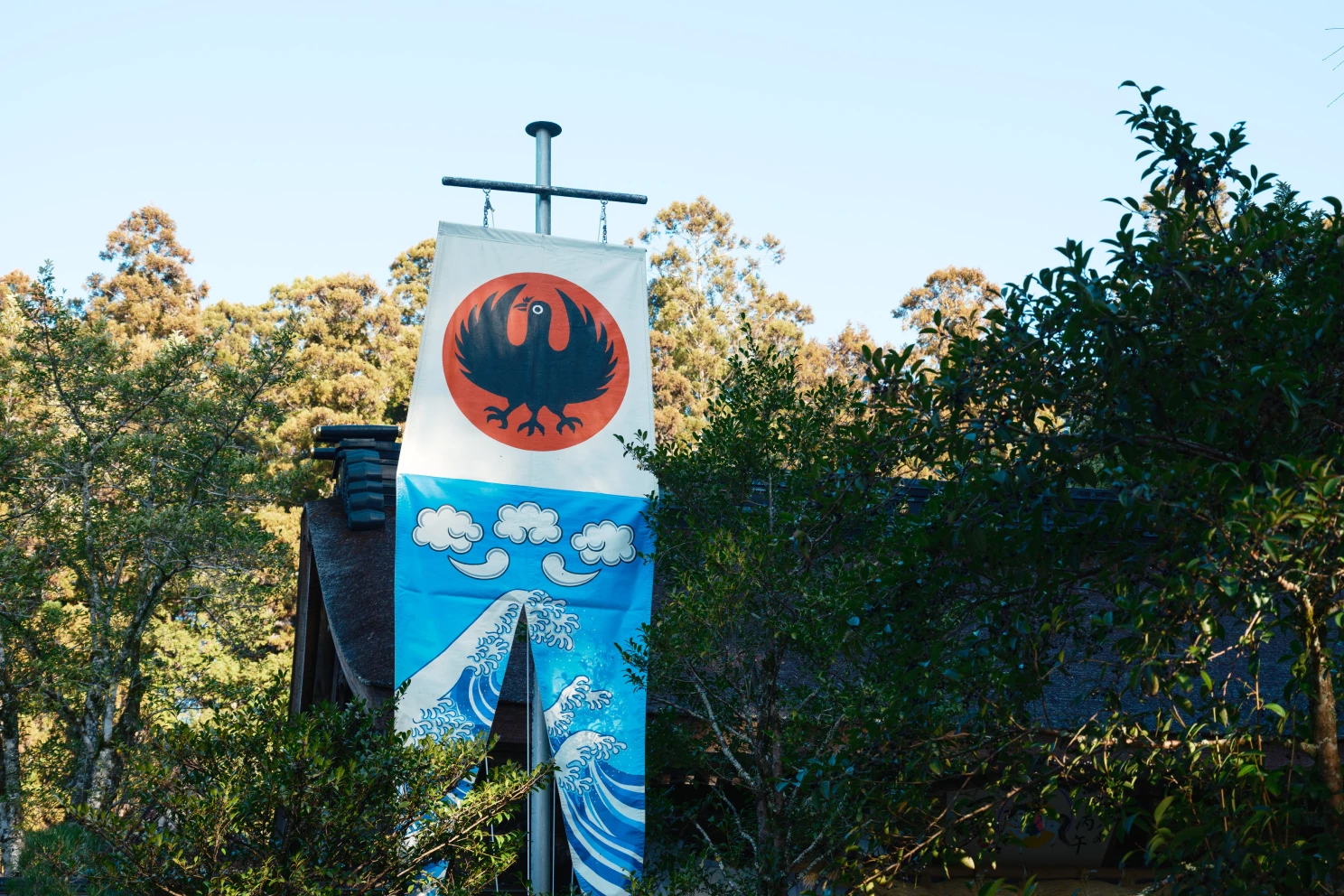
You’ve decided to begin your journey at Kumano Hongu Shrine, one of the Three Great Shrines of Kumano and the head of the more than 4,700 shrines throughout Japan dedicated to the Kumano sect of the Shinto faith. After paying your respects here, you intend to cross the Yokogaki Pass on a section of the Kumano pilgrimage route. The trail may be short, but it is an ancient one steeped in the atmosphere of days gone by.
***

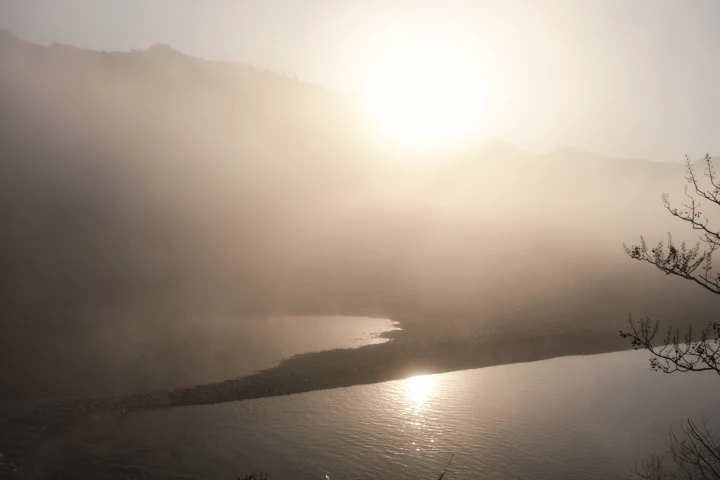
From Shin-Osaka Station, you head south on National Route 168. Your first destination—Kumano Hongu Shrine—lies deep in the mountains.
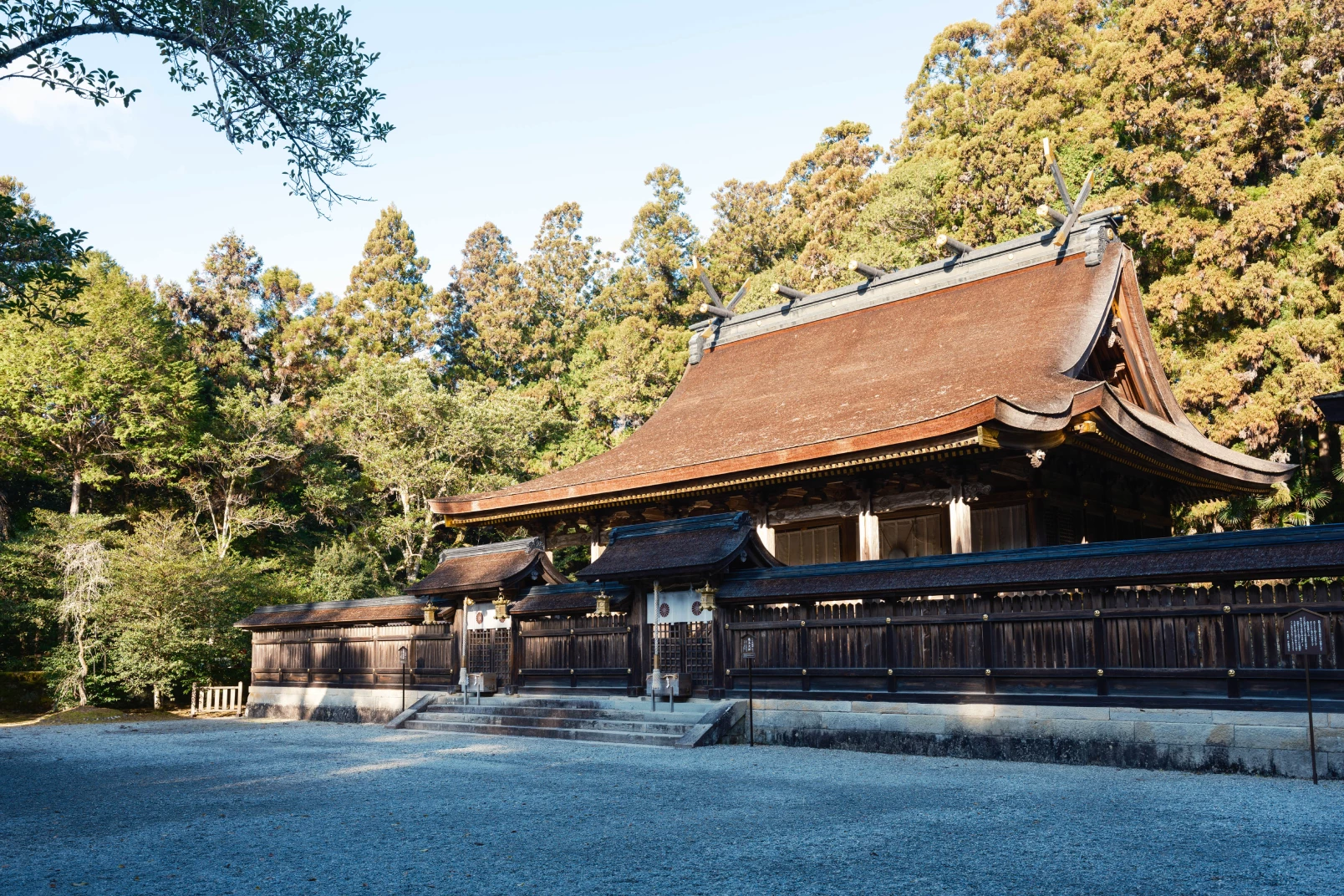
Kumano Hongu Shrine : One of the Three Great Shrines of Kumano
A sacred gate without a shrine building
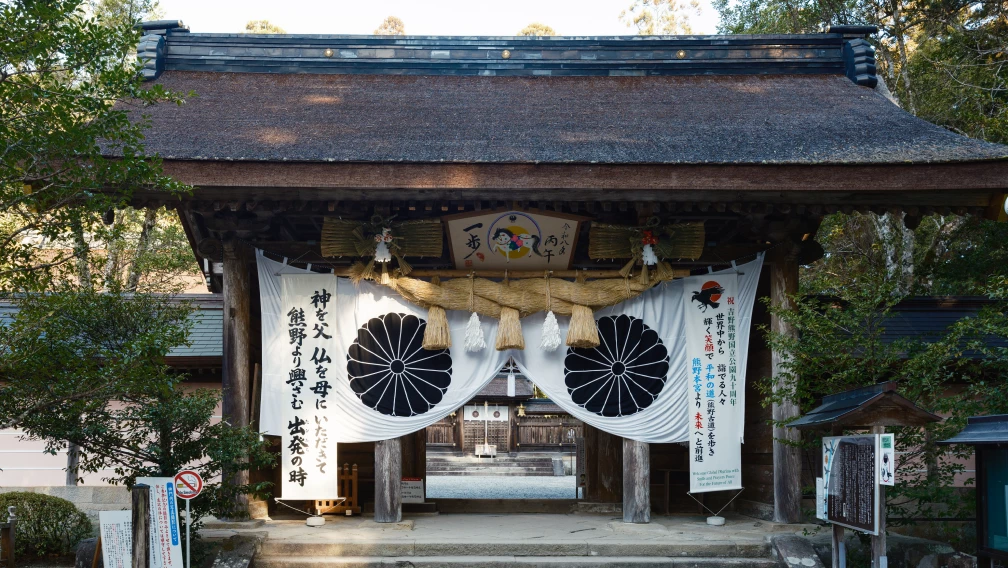
The first stop on your journey is Kumano Hongu Shrine. One of the Three Great Shrines of Kumano, this shrine has inspired worshippers’ deep devotion for thousands of years. The shrine once stood at Oyunohara—a sandbank at the junction of the Kumano, Otonashi, and Iwata Rivers—but was relocated to its current location following a major flood in the late 19th century. The shrine grounds, surrounded by cedar trees and a deep stillness, are steeped in the history of nature worship and the Kumano pilgrimage. As the head shrine for the many Kumano shrines throughout the country, it continues to receive many worshippers.
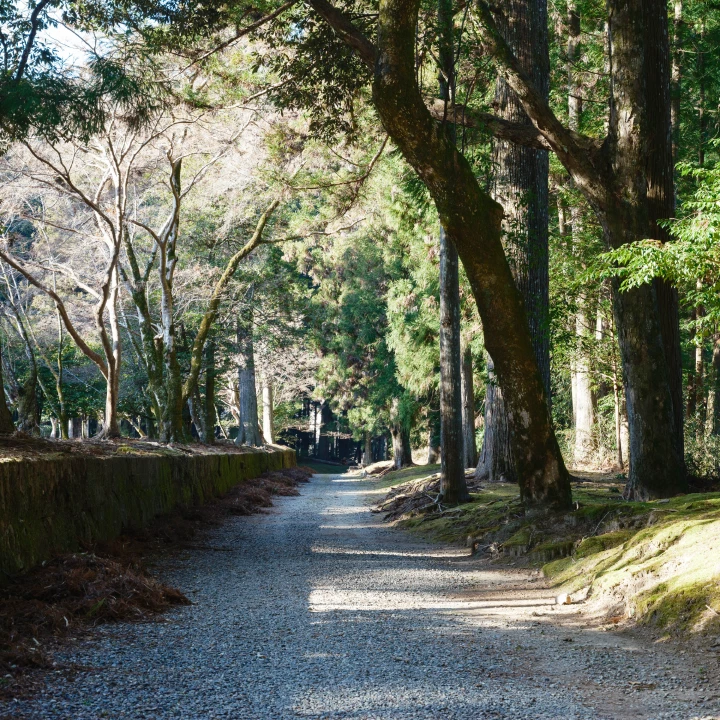
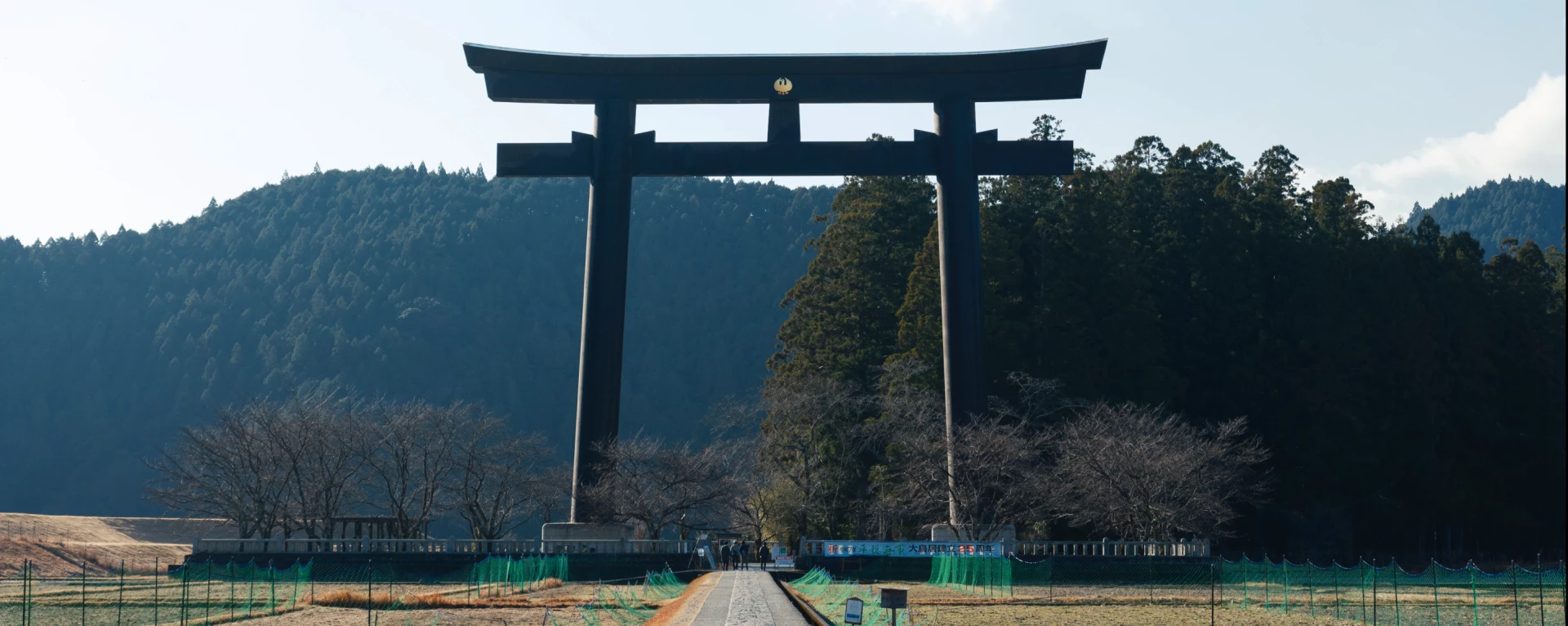
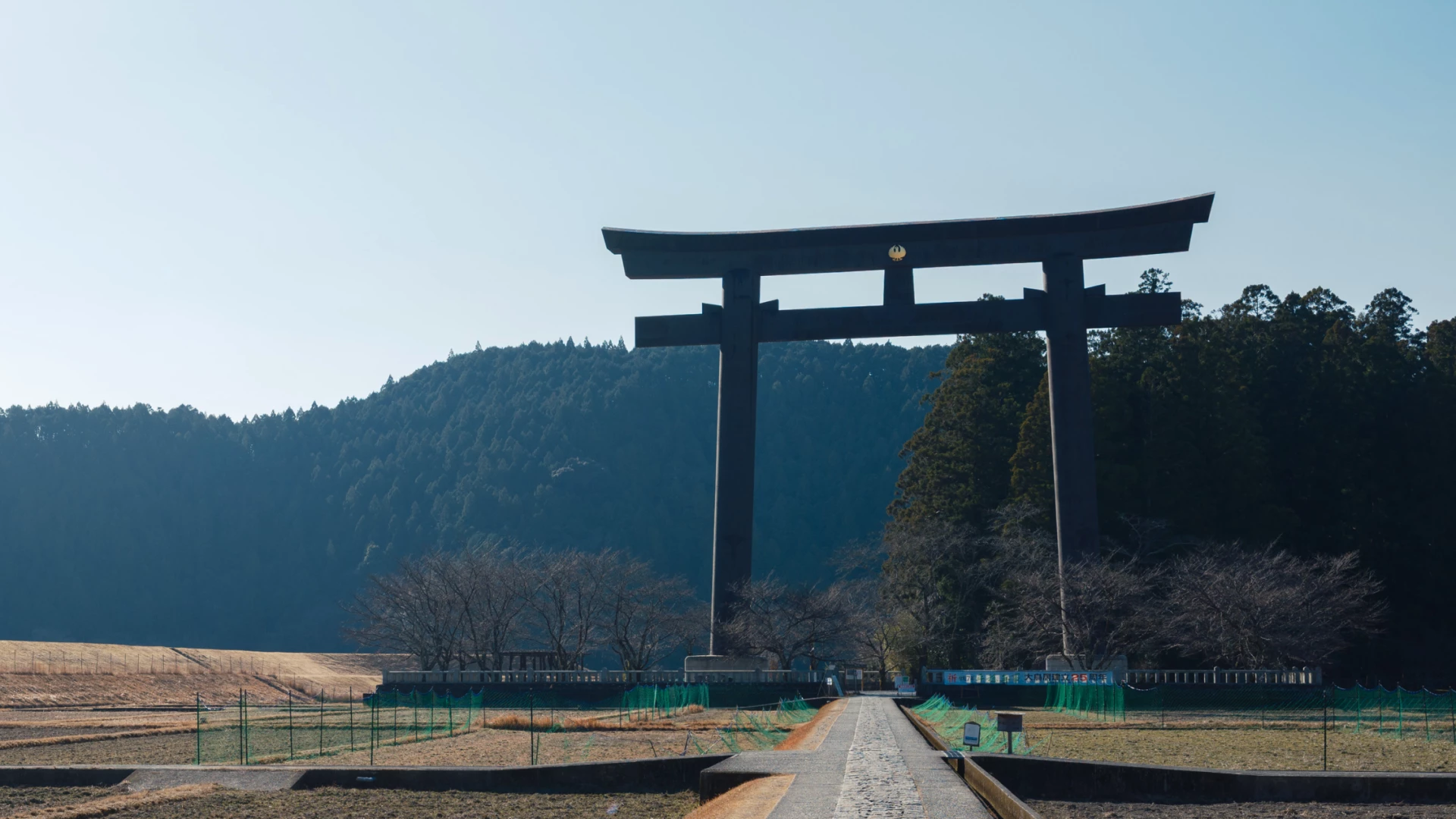
After leaving the shrine, you walk ten minutes to Oyunohara, where Japan’s largest torii shrine gate stands proudly in the middle of a wide sandbank. Yet, the moment you step through the gate, your body instinctively senses that this is a place once visited by gods. The memory of prayers from the past lives on at Oyunohara.
Shimoji: Makers of a confection passed down for generations
The dedication keeping usukawa manju alive
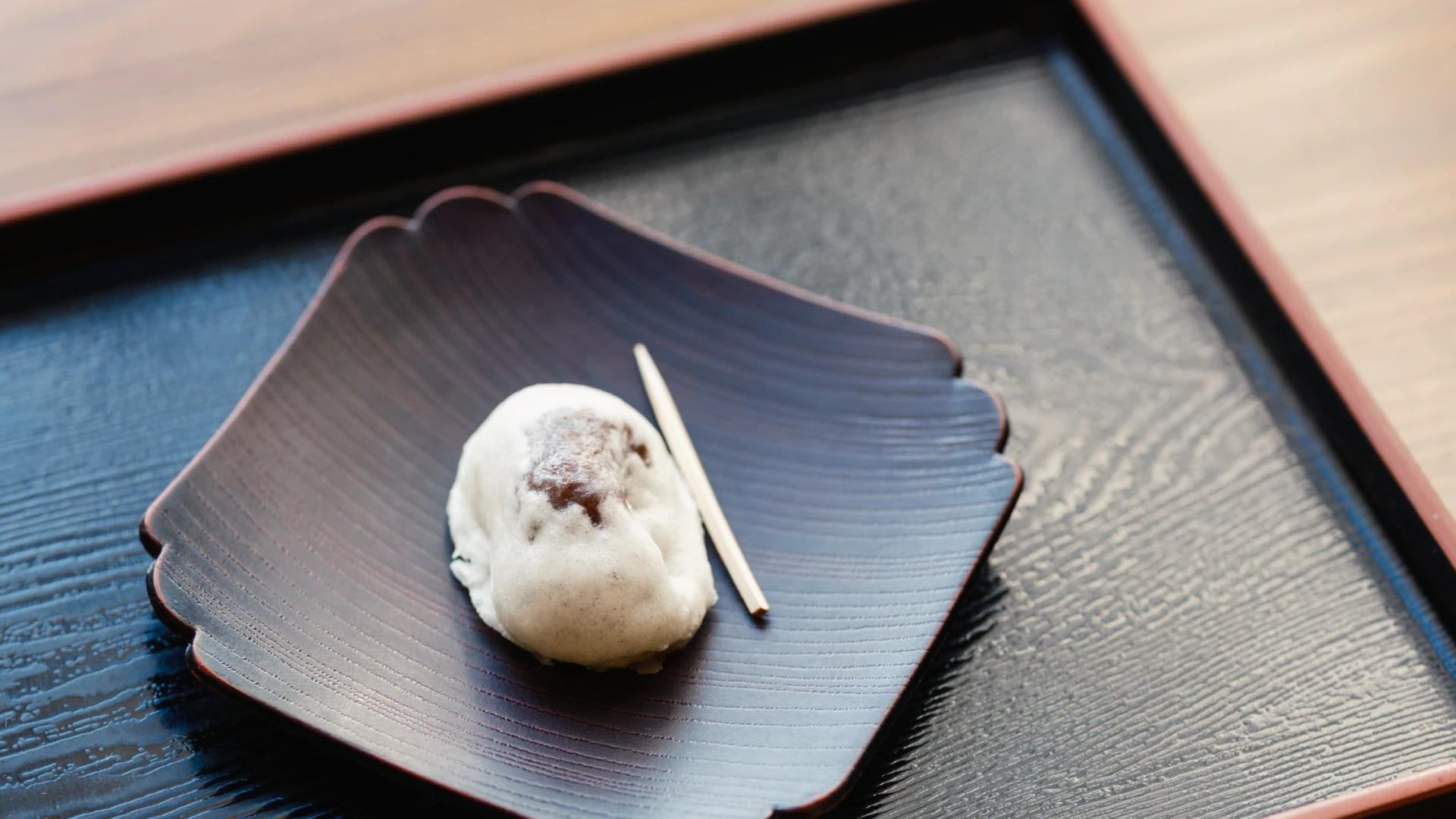
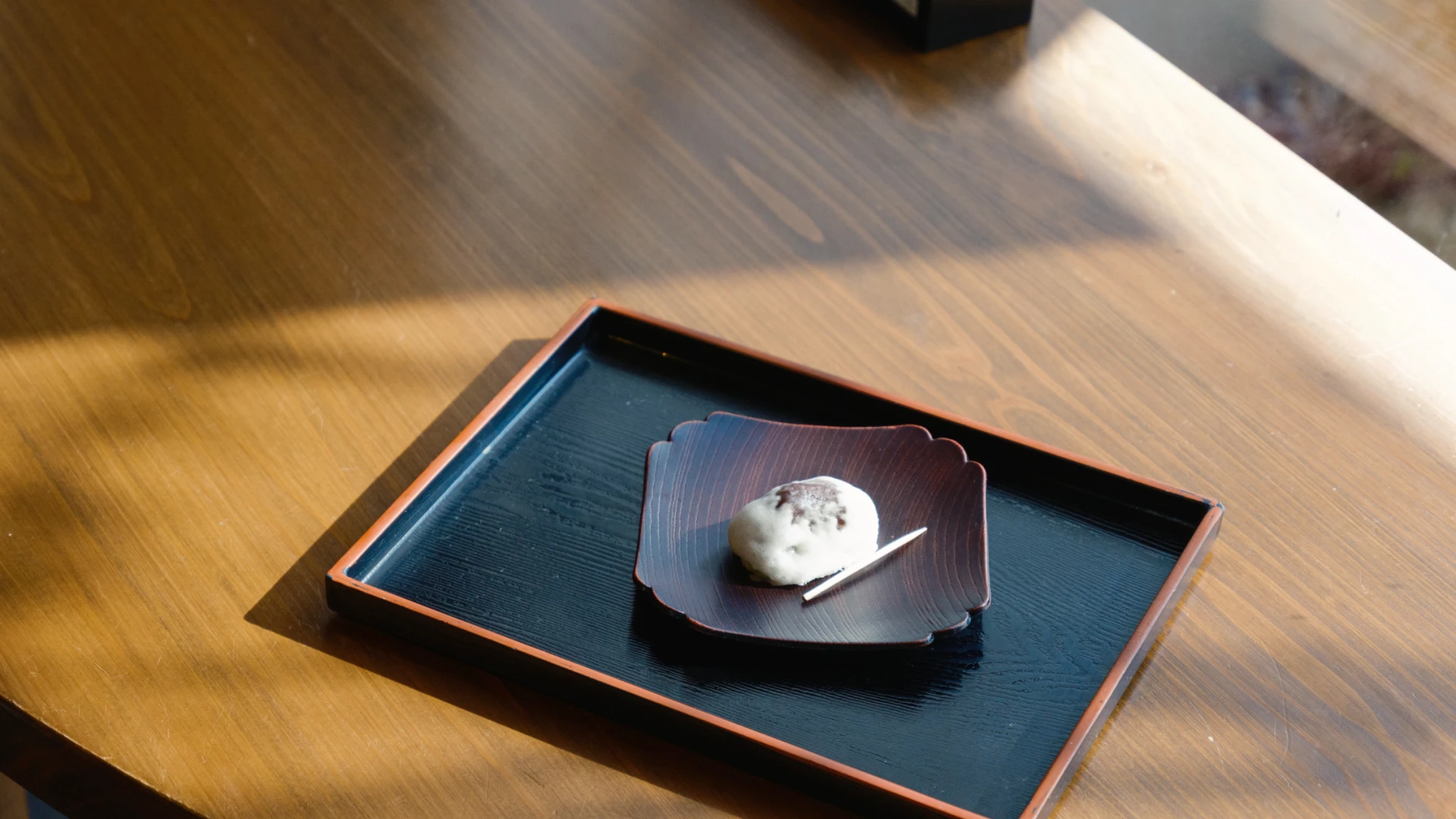
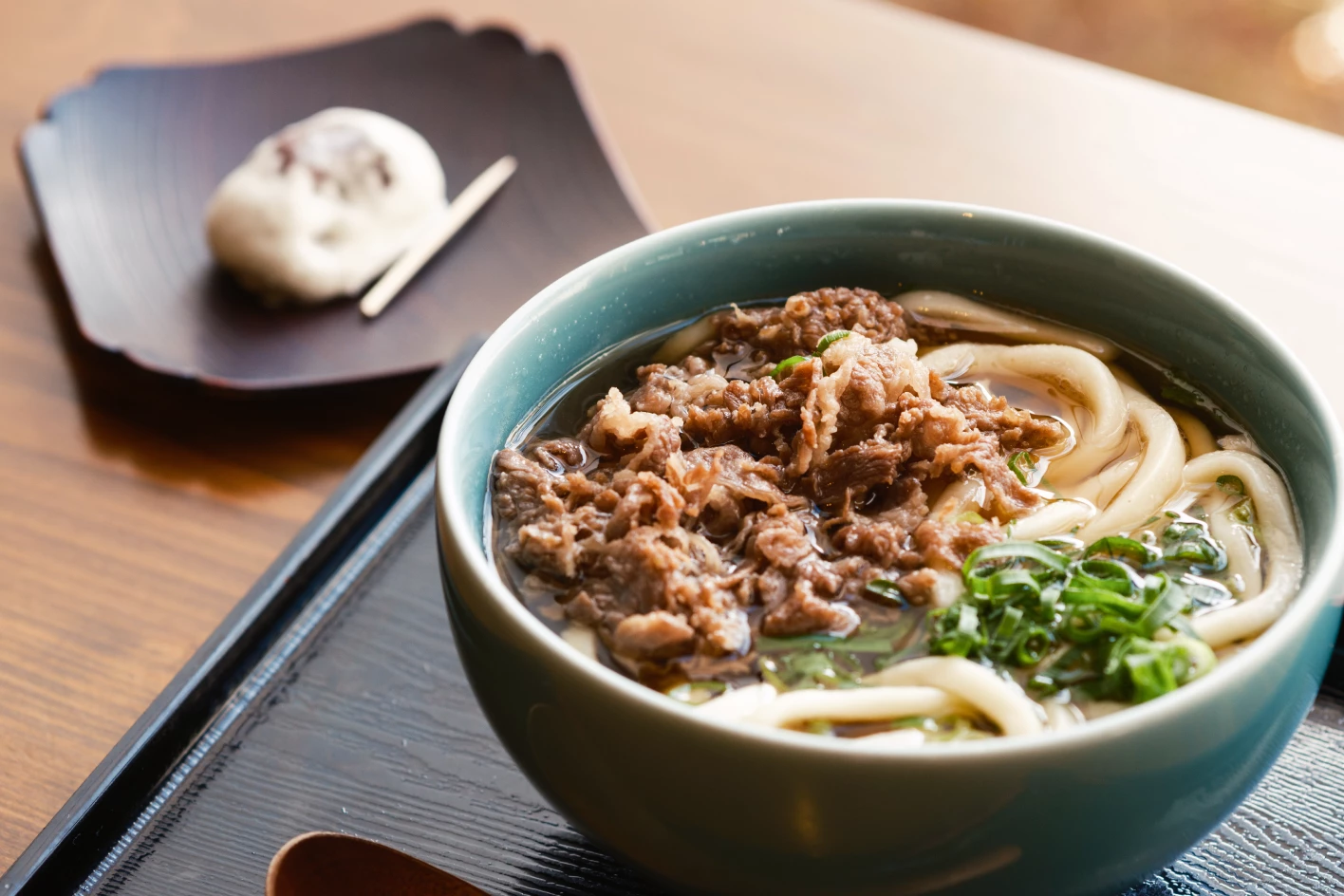
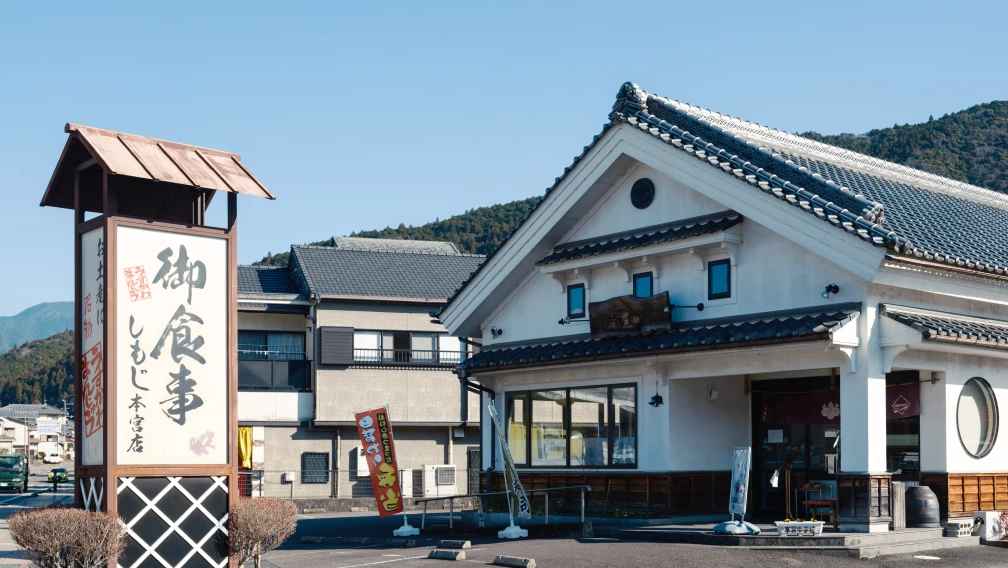
After a long drive and a walk around the shrine grounds, hunger has set in. You decide to stop in at Shimoji, a restaurant standing just outside the shrine. You order the Kumano Beef Udon, a bowl of thick noodles with a generous portion of Kumano beef—a breed of premium wagyu beef produced here in Wakayama Prefecture. You also get the restaurant’s signature usukawa manju, a thin-skinned rice cake filled with red bean paste. The rich, wholesome flavor of both dishes is so good that you polish them off in no time.
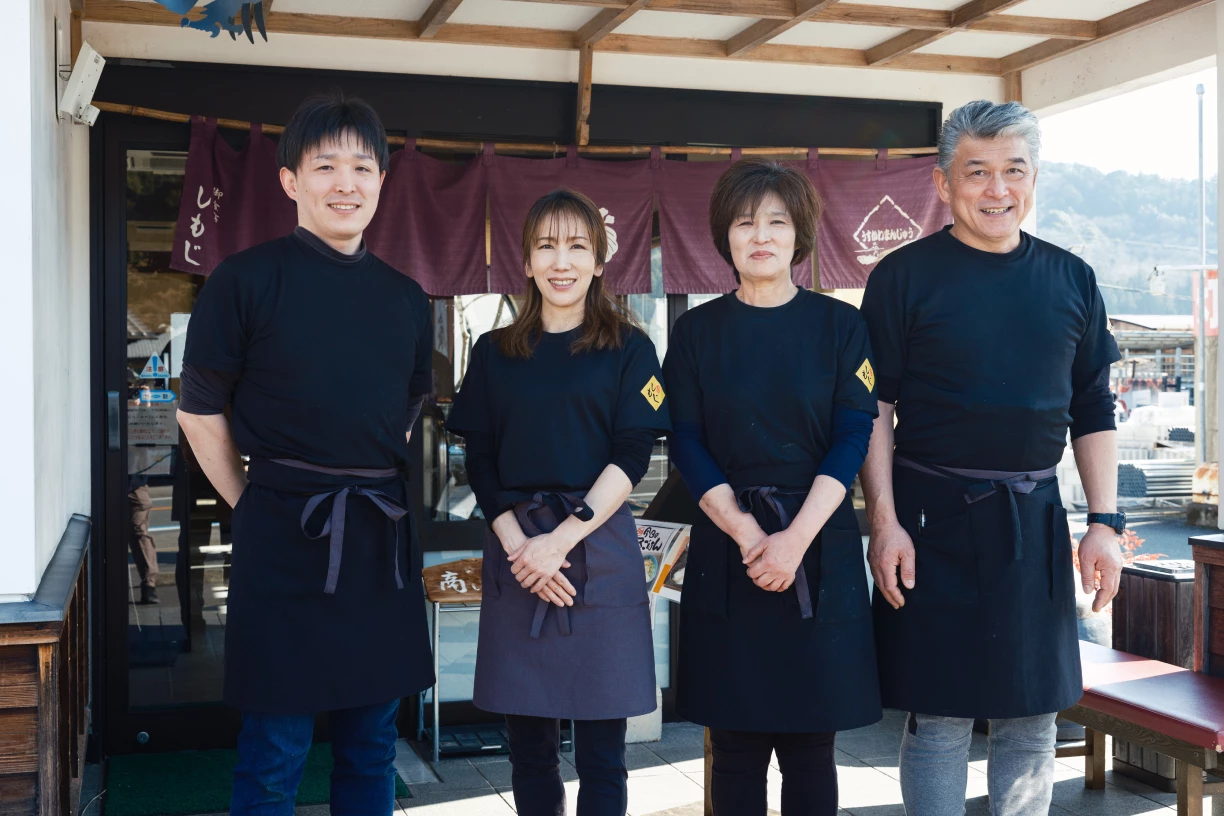
The proprietor, Kazuhisa Shimoji, tells you that his great-grandfather started making usukawa manju over 100 years ago. Kazuhisa’s son now helps run the restaurant, so it is a true family affair spanning five generations. Forty years ago, these cakes were sold at a number of shops in the neighborhood, but Shimoji is the only one left. “We have a lot of elderly customers who buy them out of nostalgia,” says Kazuhisa. “It’s what motivates us to keep making them.”
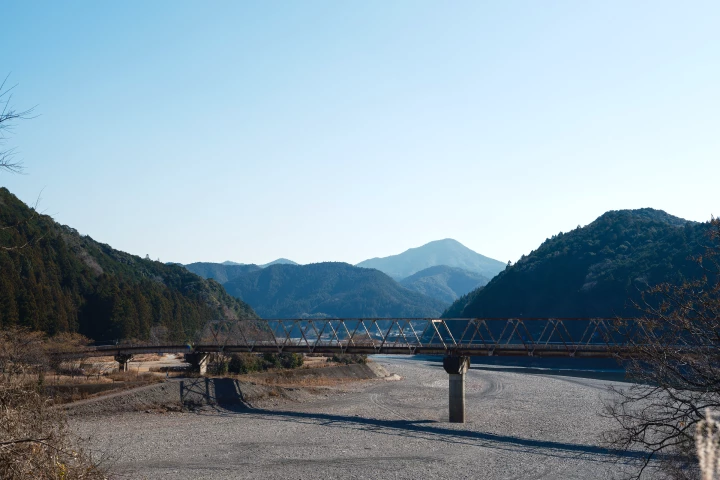
You get on National Route 311, which follows the Kumano River. The rugged, rocky terrain of the area gradually gives way to the lush fields of the lowlands.
Yokogaki Pass: Walking the Kumano Kodo
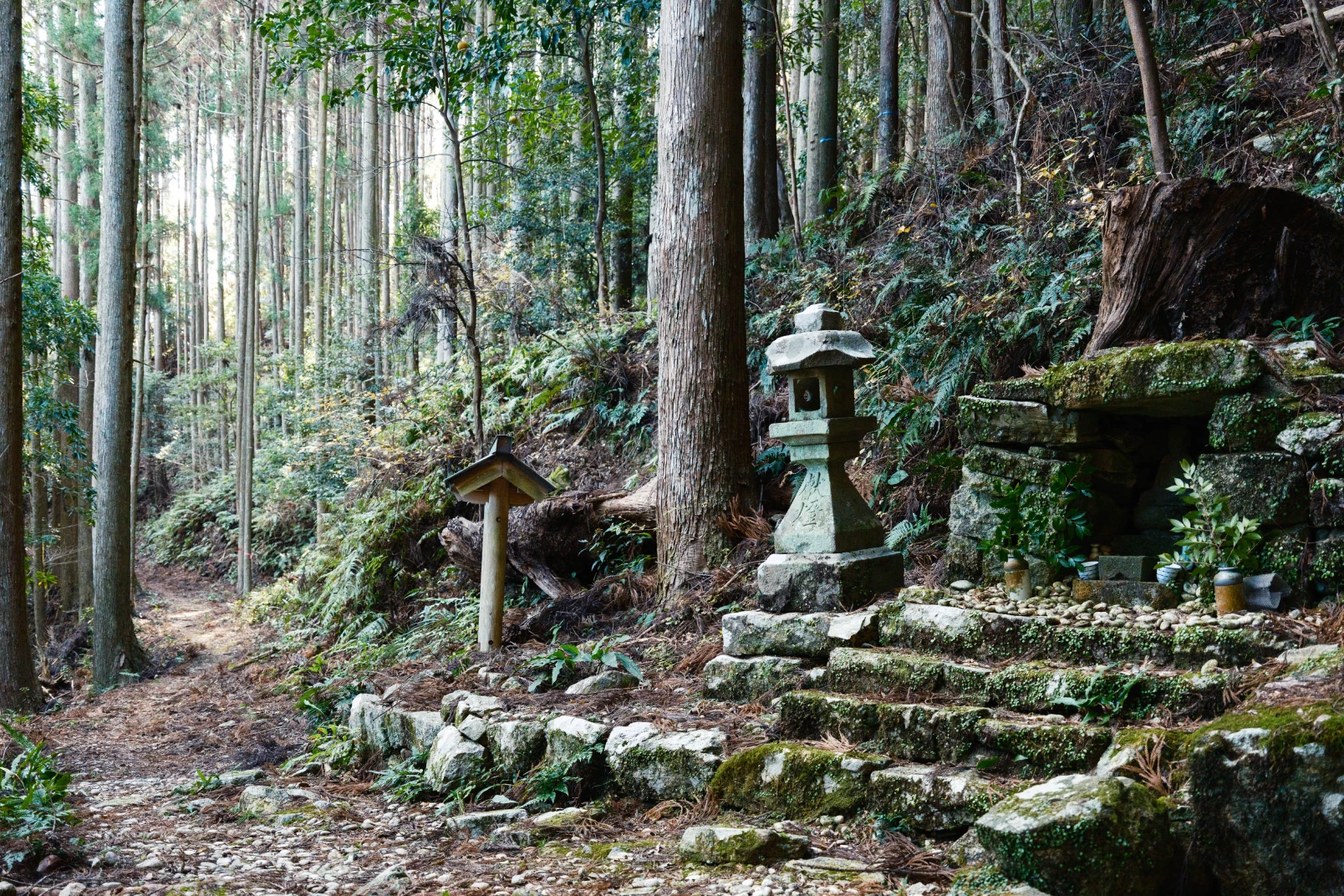
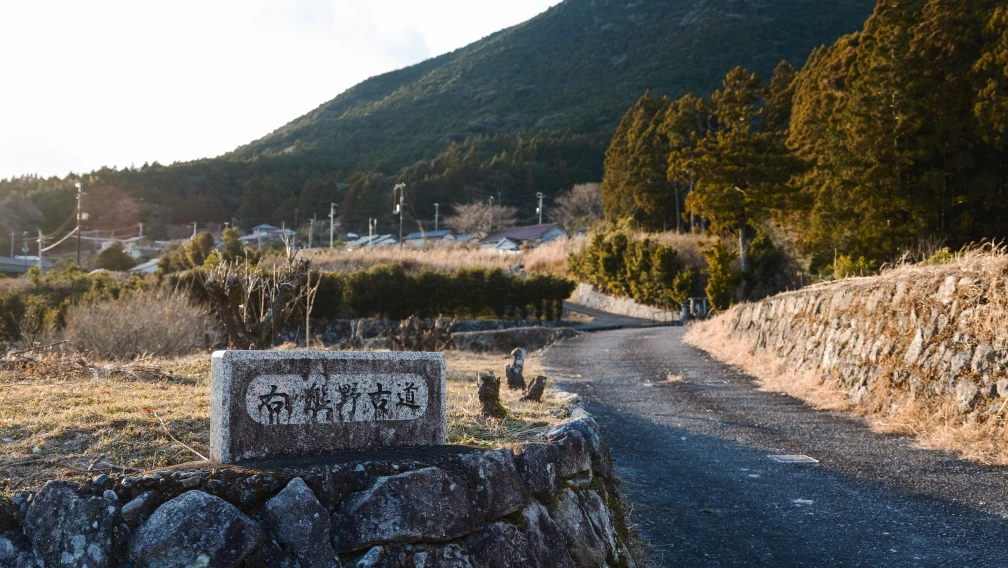
You know that no visit to Kumano would be complete without walking some of the Kumano Kodo, the series of pilgrimage routes crisscrossing the Kii Peninsula. You’ve chosen the Yokogaki Pass, a section of the Iseji route branch that heads towards Kumano Hongu Shrine. This will involve parking at the Konogi Community Center, crossing the pass on foot, and then taking the bus back to your car.
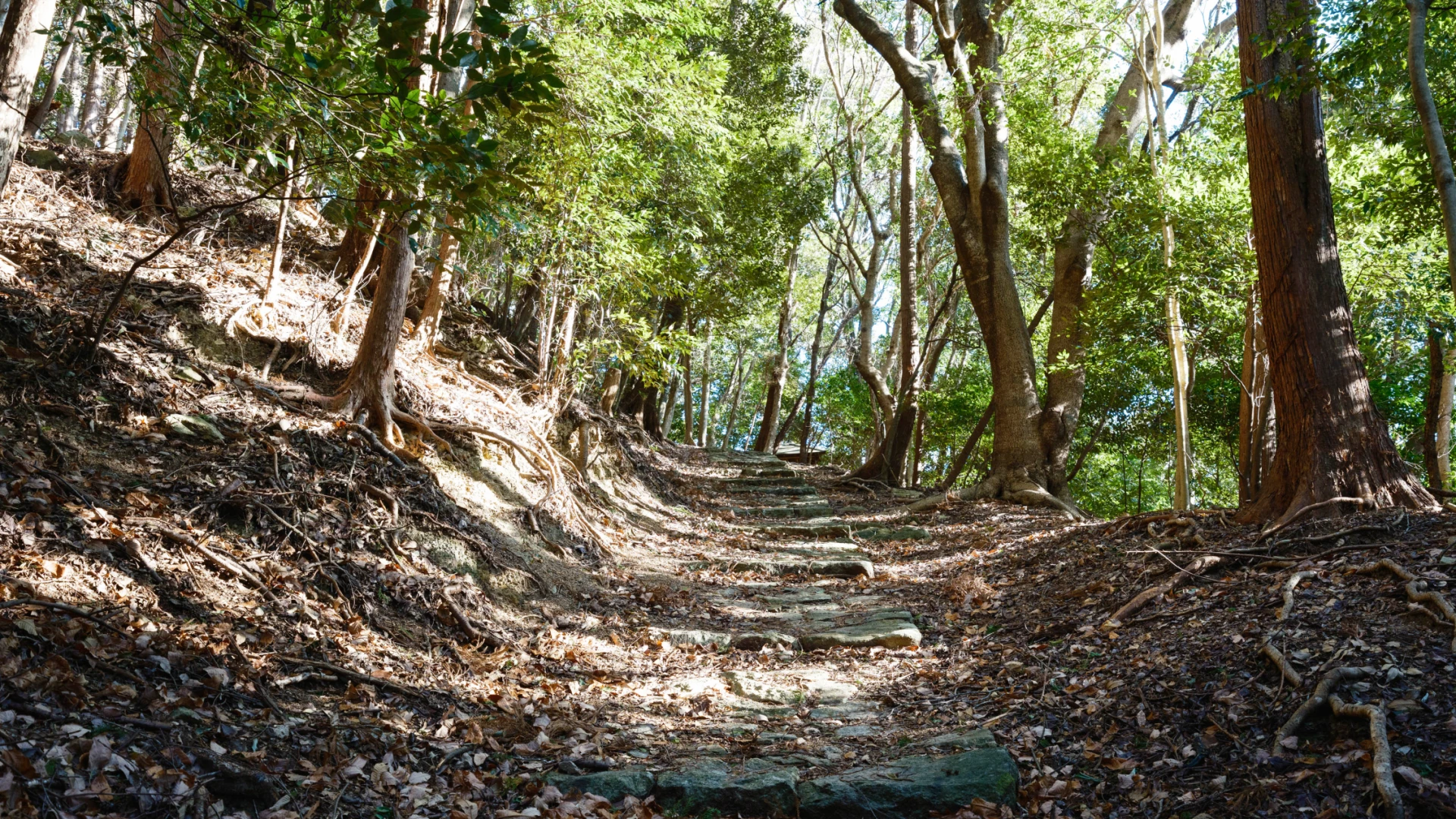
You walk through citrus groves and see the trailhead before you finally set foot on the ancient forest road. Along the way, you greet Mizutsubo Jizo—a religious statue featured in local legend—and then continue to the summit at an elevation of 305 meters (1,000 feet). As you approach, the view opens up, and you are welcomed by a panorama of the ocean. You wonder how many other pilgrims before you were similarly awestruck by this view.
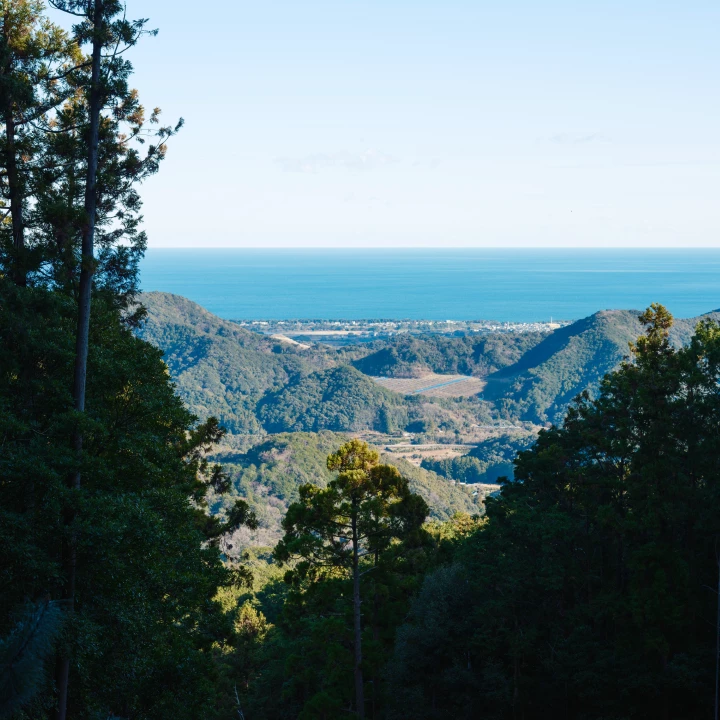
Just beyond the summit, the trail is paved with rhyolite stones covered in moss in a beautiful shade of green. You descend onto a paved road and travel past the beautiful rice terraces of the hamlet of Sakamoto, where you pause to admire the stone lantern perched on Kamejima (“turtle island”) Rock. Finally, you board a bus at the Takachira bus stop and return to your car at the community center.
A prefecture-straddling nightcap at Fairfield by Marriott Mie Kumano Kodo Mihama

The ultimate reward for an active day
It is late by the time you check in, so you are more than ready to set down your luggage and collapse into bed, letting your body and mind relax after all that walking. You pop into the Marketplace in the lobby, where you find a selection of regional craft beers, including Isekado from Ise City in Mie Prefecture and Nagisa Beer from Nanki-Shirahama in Wakayama prefecture. You buy one of each to honor both prefectures—Mihama is, after all, on the border—and down them happily. It’s the perfect thing to cap off a day full of walking and crossing mountain passes.

Per Night Per Room from ¥15,730